Cash on Delivery is simple for customers but often messy for courier companies. When COD is handled manually, it’s hard to track cash or know who’s holding what. Onro fixes this by automating COD, giving courier businesses clear tracking and full visibility at every step.

Key Takeaways

Cash on Delivery (COD) is one of the common payment types used by courier companies and other similar businesses.
This payment can be handled manually or automatically. Manually handling COD can be difficult to track and cause issues for businesses at each step.
The journey that COD takes from the order sender (customer/merchant) to the recipient can be challenging to monitor or trust. With that being said, Onro provides a solution by automating every step of this flow and recording the transactions to show where the cash is with full clarity for the business, customer, and the driver responsible for collecting the cash.
Manual Flow of Cash on Delivery
Let’s take a look at the COD flow.
Step 1: COD Declaration
The customer (Sender) claims the COD amount during placing the order by telling the driver, writing on a receipt, invoice, or sending a message on WhatsApp. The number isn’t submitted anywhere in the system, so it can not be tracked.
Step 2: Dispatch & Assignment
In the second step, the shipment (order) is dispatched and assigned to a driver. The driver is now responsible for collecting the cash at the delivery stage.
Step 3: Delivery & Cash Collection
While completing the order, the driver claims the COD from the receiver. Here, the recipient can only trust the driver’s words for the amount or the receipt they get. Possible issues at this step
Challenges:
- The receiver doesn’t pay the COD to the driver fully.
- A wrong COD amount is requested from the receiver.
- The receiver disapproves of the COD amount, and since the driver might not have all of the information, disputes can happen.
- The driver asks for more money, and no one can track or find out how and when it happened.
Step 4: Cash Remittance (Driver Return)
In the next step, the package is delivered, and the COD is paid to the driver. Now, the driver, holding the cash, is responsible for taking the money to the courier company so it can be paid back to the customer.
Challenges:
- The company never knows exactly when the money is with the driver.
- The company also doesn’t know how much money is with the driver.
- There are no records of when the money is paid to the driver.
Step 5: Customer Payout (Withdraw)
After delivering the money to the company, the company is responsible for paying back the customer to end this flow. In this process, there are no transactions recorded with the exact time and amount to ensure clarity to the customer.
Other Challenges
All these steps can lead to several bigger issues in the business and can cause a headache for everyone, especially the courier company. To name some:
- The whole process is based on trust among the company, the sender, the receiver, and the driver, and there is not much transparency in the process.
- Minor mismatches between expected and collected cash are really hard to trace later.
- There is too much manual work, which slows the payout process.
- The slower the payout process, the higher the chance that the cash goes missing.
- If conflicts happen during the payout, it’s so hard to track who is right and who is wrong.
Automated COD With Courier Software
If this process is automated, the majority of the problems can easily be solved or can be easily tracked if anything goes wrong.
Why tracking is possible with automation:
- Drivers can easily see exactly how much they have collected and what needs to be remitted.
- Cash flow and earnings are tracked automatically, reducing errors and confusion.
- Customers get a clear and accurate view of what they are paying and why.
- Payments to sellers or senders can happen immediately, without manual delays.
Auto Flow of Cash on Delivery (Using Onro)
Onro is a courier software that handles COD management by automating the process step by step, offering full clarity to overview what is happening.
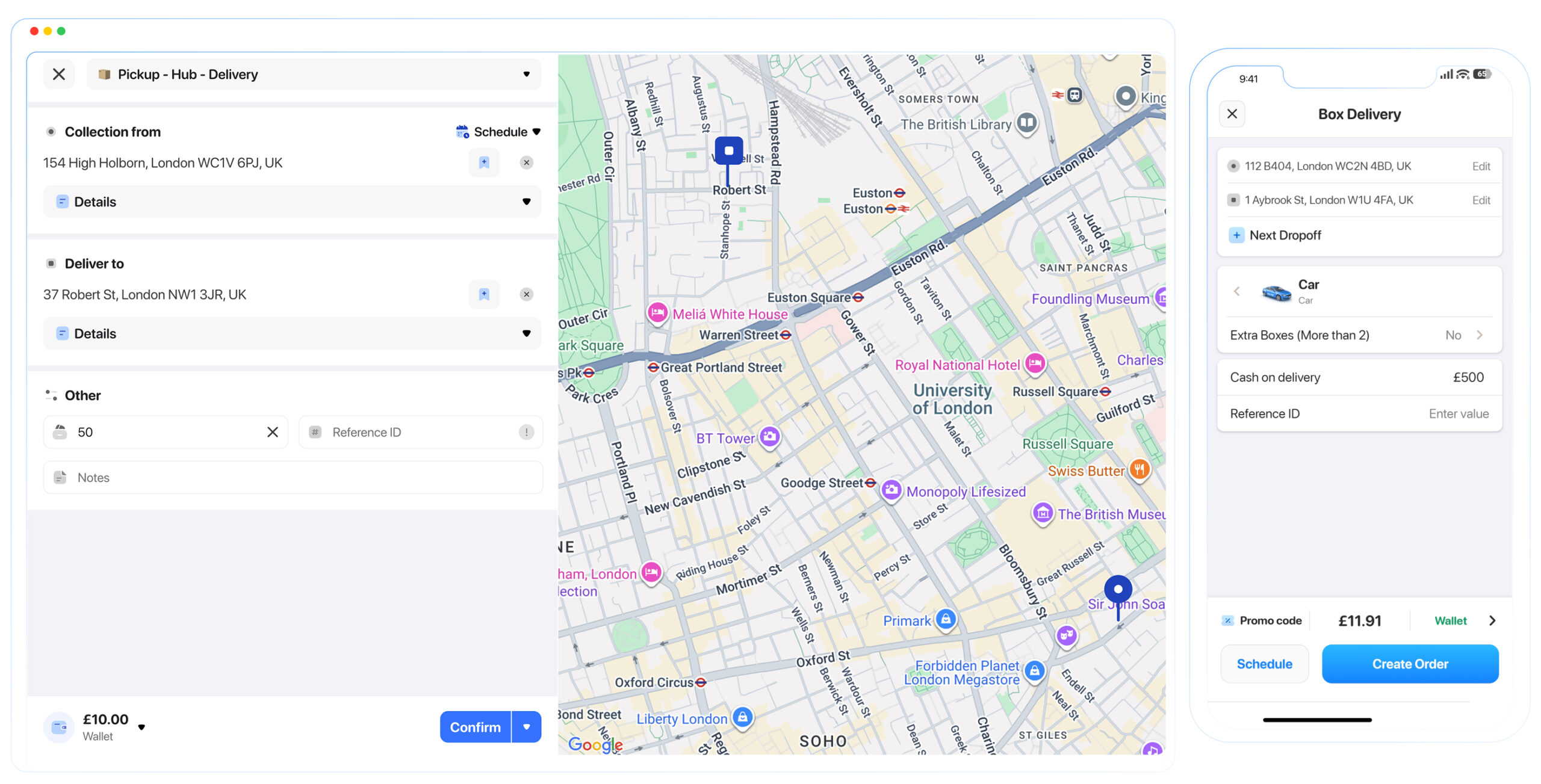
Step 1: COD Declaration
The order creator (customer, company, sender) submits the COD amount while placing a delivery order. This amount is viewed in the order details and is visible to the driver, customer, and the company. The amount is also mentioned on the shipment label and the receipt. No extra notes or messages are needed here. The system handles it all.
Step 2: Dispatch & Assignment
The driver is dispatched to the order and can see the COD amount that they need to collect at the delivery. It is clear to the driver how much exactly they need to collect without any calculations required.
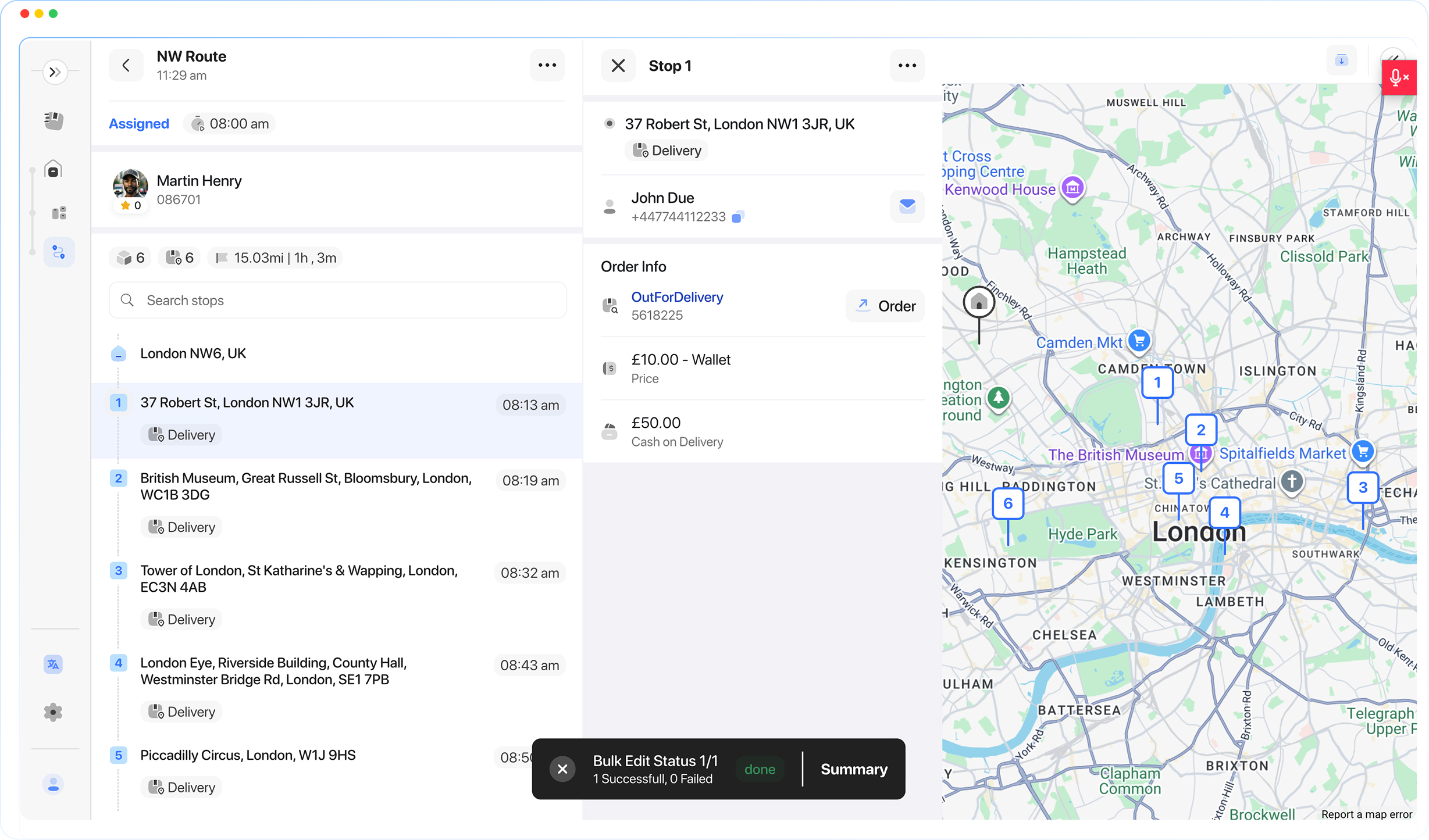
During the delivery, the driver requests the COD with proof. The receiver can fully trust the driver with the requested amount. So, possible conflicts are reduced.
Step 3: Delivery & Cash Collection
The receiver pays the money, and the driver holds it until it’s paid back to the company. As soon as the order is completed, Onro automatically creates a COD transaction in the driver’s wallet. So the driver and the company can both see, instantly, how much cash the driver is holding and needs to return.
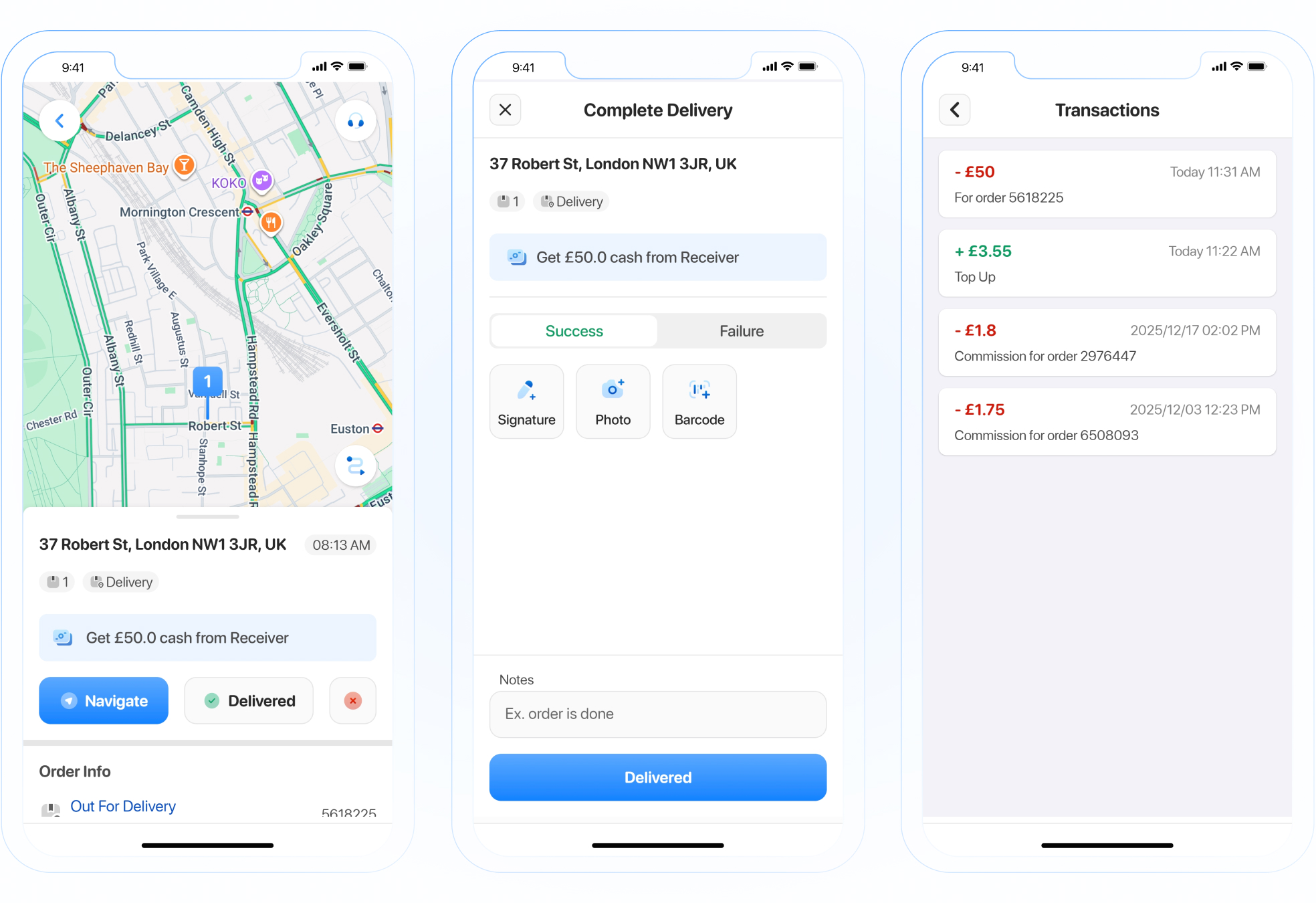
Step 4: Cash Remittance (Driver Return)
When the driver pays back the company, another record can be created in the system through wallet transactions, and the driver’s balance updates accordingly.
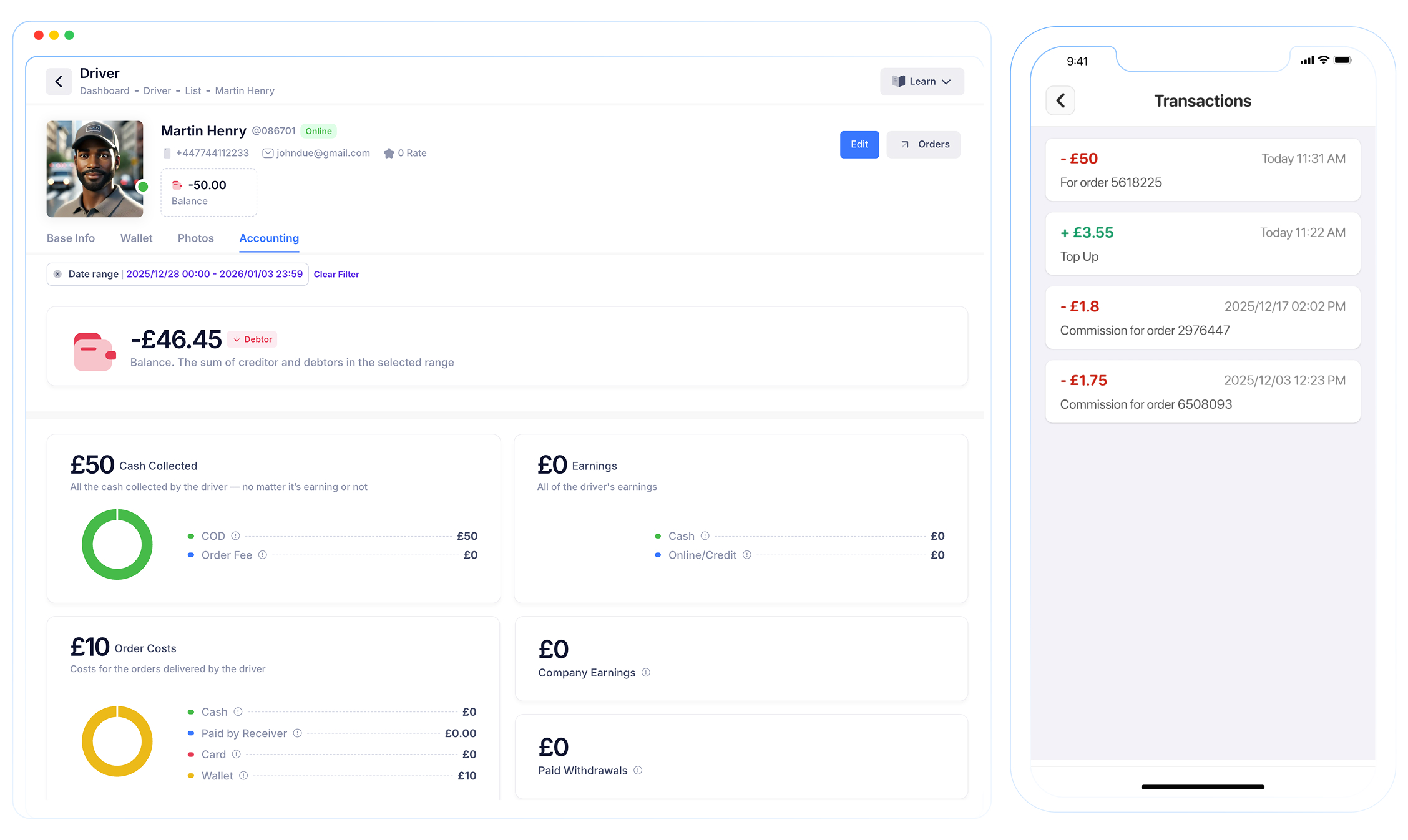
Step 5: Customer Payout (Withdraw)
Now it’s time for the company to pay the sender (customer). Customers can request COD withdrawals anytime from the app or portal, without contacting the company. After paying the customer and creating the transaction, the customer’s wallet will update. Because everything is recorded per order, the sender can see what was collected, when it was returned, and when it was paid out.
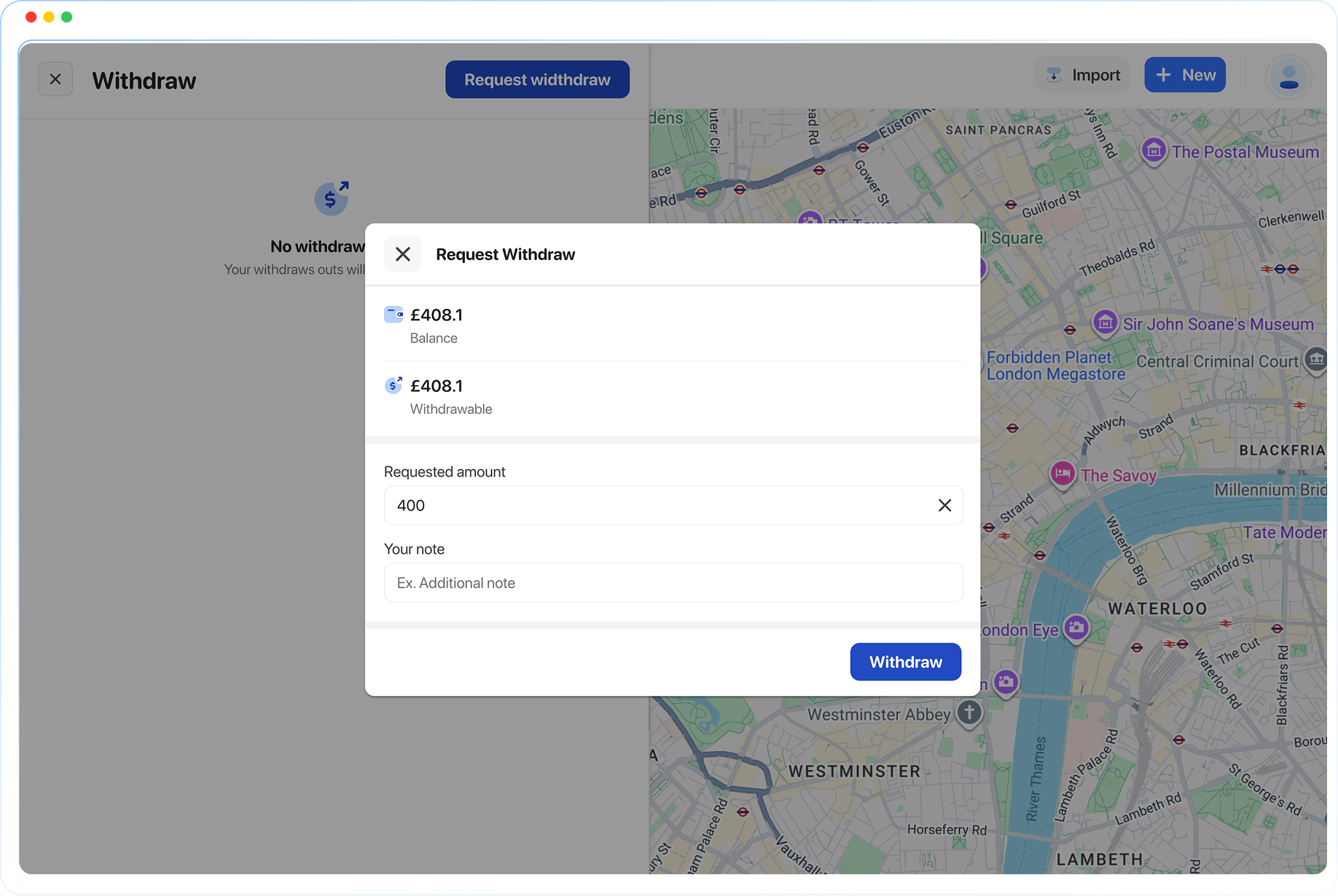
The result is the fact that COD is no longer based on trust and is fully recorded and trackable.
You get clean tracking, proper records, exportable reports, and wallets that reflect reality. Disputes and messy reconciliation are minimized.
FAQ | Automate Cash On Delivery with Courier Software
Cash on Delivery (COD) is a payment method where the receiver pays for the shipment at the time of delivery. The driver collects the cash and returns it to the courier company. Later, courier company pays the sender.
Manual cash on delivery relies on paperwork that makes it difficult to track collected cash. It often leads to delayed payouts, missing cash, and lack of transparency for drivers and customers.
Onro is a courier/delivery management software that records the COD amount at order creation and tracks cash collection at delivery. Courier companies manage customer payouts through wallets. Every step is time-stamped and linked to the order for full visibility.
Yes. Drivers can see exactly how much cash they need to collect and return, while customers can track how much was collected, when it was remitted, and when they were paid—without contacting your company support.
Automated cash on delivery prevents cash mismatches, speeds up payouts, and gives courier businesses a new payment method for their clients that can help to scale their courier business.