Everything revolves around the order in a courier company. This first step is important. The ease of use, speed, and accuracy of this step prevent problems that might occur throughout the entire delivery process.
Which Ways Are Not Ideal (Inefficient)
Your courier company (whether it’s next-day, same-day, or on-demand) might use one or more of the following methods:
- Phone: The customer calls your office and registers a request for one or more deliveries for a specific time. The operator receives and records this.
- Messaging Platforms: WhatsApp, Telegram, or other messaging apps.
- Excel/CSV File Upload: This method is more common for B2B clients.
Problems with the Manual Order Taking
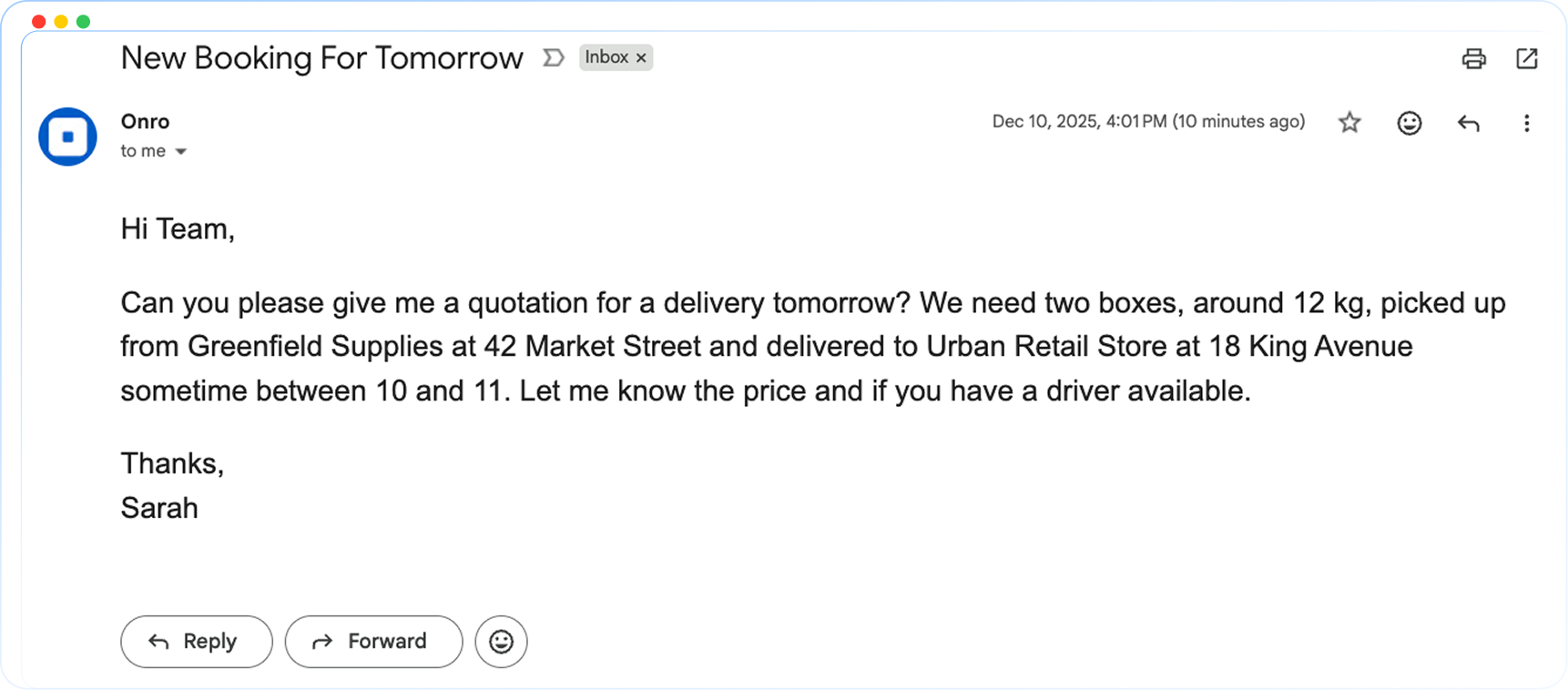
- Low Speed: They waste a lot of time. The customer must write/tell their information, there is no history, and they have to introduce themselves and send pickup information every time they request an order.
- High Cost: Individual staff members in the company must be responsible for receiving and processing incoming orders.
- Low Accuracy (High Error Probability): The probability of recording or transferring incorrect information is high: wrong address, inaccurate phone number, and pickup/delivery times may not be precisely received.
- Not Scalable: If you want to increase your orders from 100 to 10,000 per day, these mechanisms will halt your company’s growth. Costs increase significantly, making profitability difficult.
- Inconvenient for the Customer: The customer must communicate with someone, and if the response speed is slow, the customer becomes dissatisfied.
- No Integrated Payment: None of the above methods have a mechanism for the customer to pay for the delivery cost.
- Missing Map Functionality: Something that is essential in this industry to precisely determine the pickup/delivery location.
- Manual Shipment Label: After creating the order, your team must manually send the shipment label to the customer.
Onro Courier and Delivery Management Solutions
Onro helps courier companies eliminate all the above manual methods and their problems with the following features:
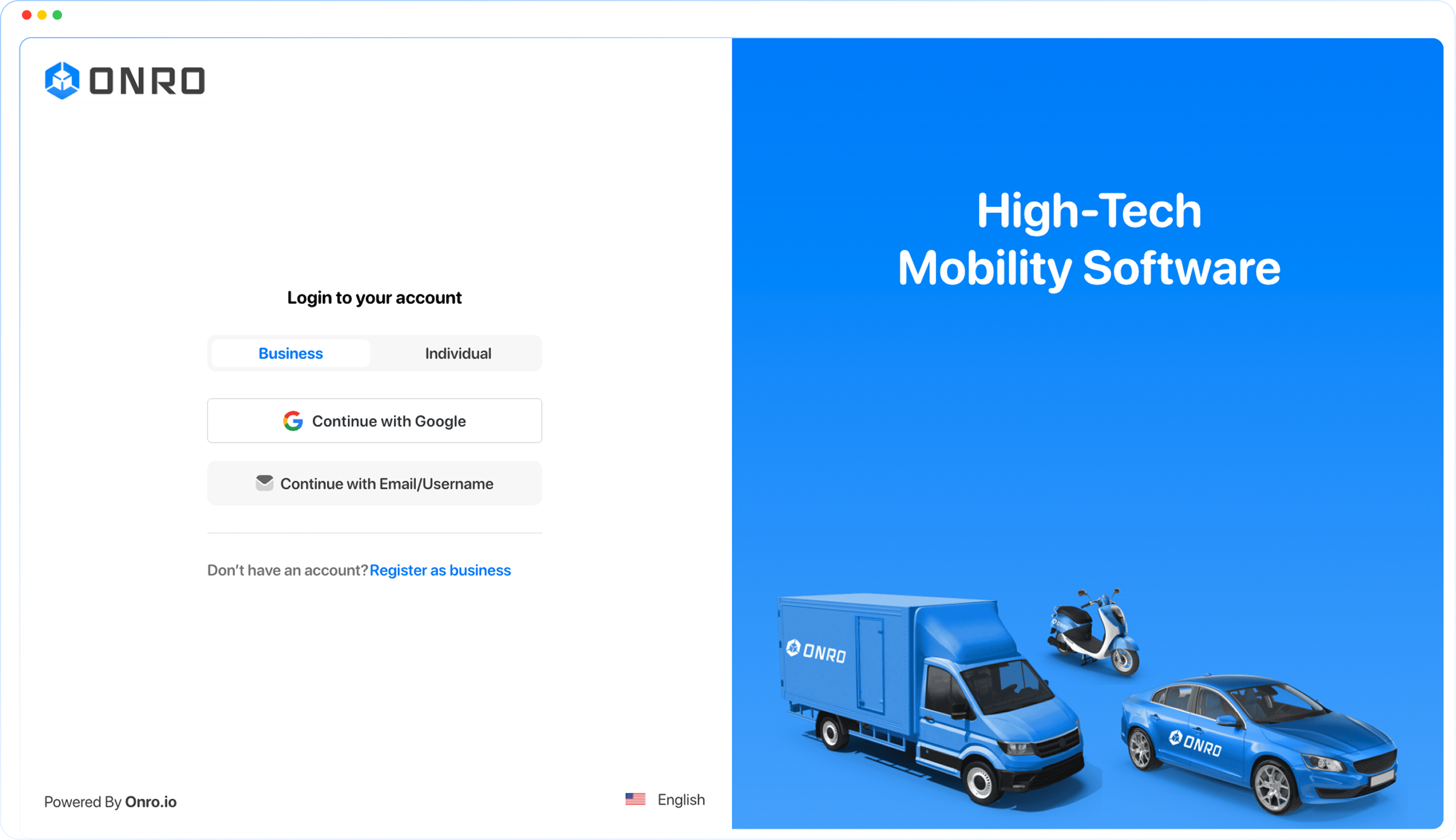
Customer Web Application
A responsive web app (on your website’s domain) where customers can register, have a user account, and create and monitor their orders.
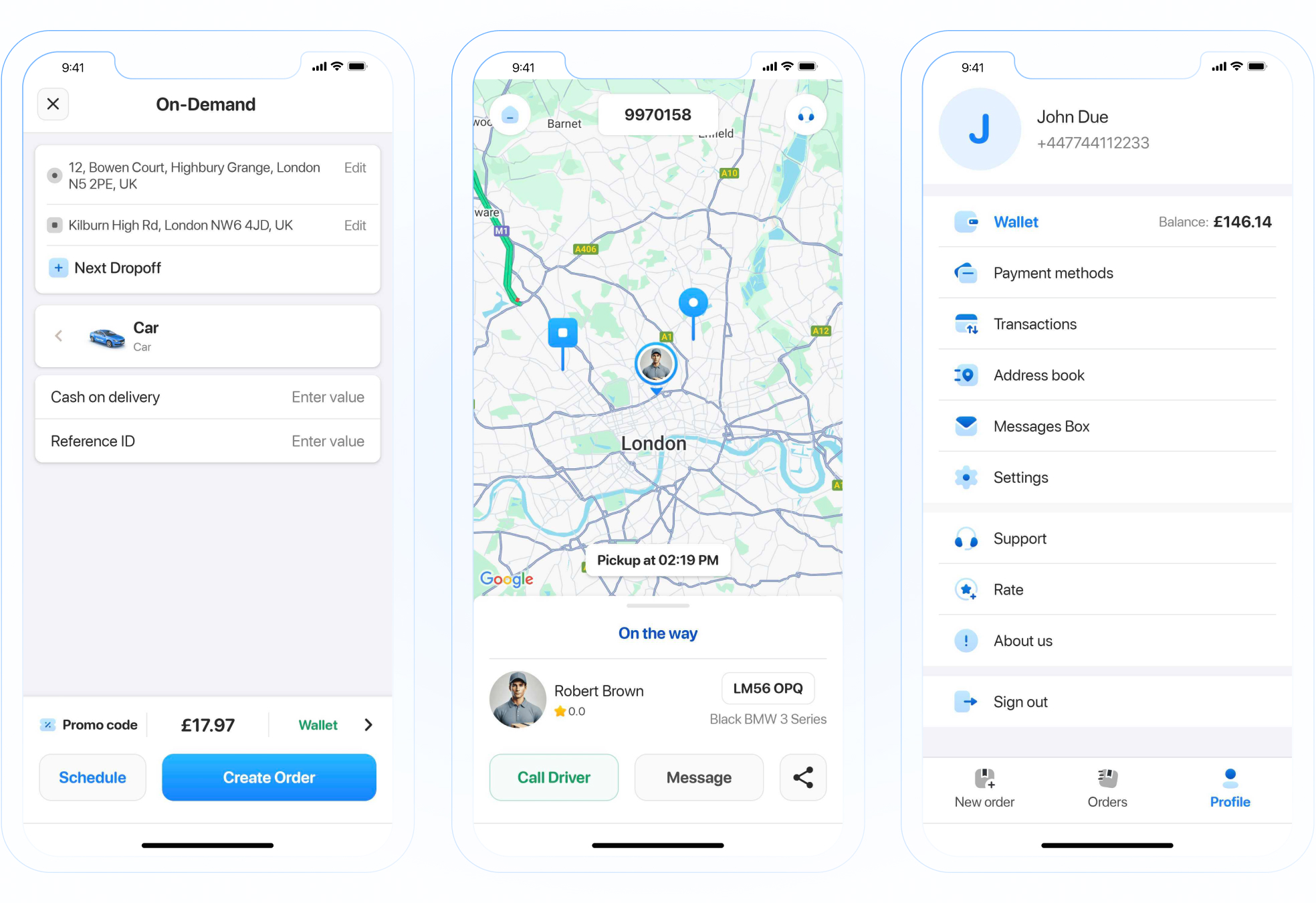
Android/iPhone Mobile App
Your customers might prefer to use the mobile app; the precise location is determined, and they don’t need a laptop or PC to use the system. Customer apps can be published on Google Play / App Store with your own brand.
Shopify App
If your customers use Shopify, they can install the Onro Shopify app, and the delivery orders they sell on Shopify will come directly into your courier software.
Integration (API)
By using the API, your customers can integrate their system, and the order creation process becomes automated.
Zapier
Using Zapier, Onro can connect to more than 4,000 other systems, and orders can be received from them.
Benefits of Using Onro Courier Software
- Automated Order Creation (Self-Service): Customers create their orders without needing to communicate with the operations or customer support team.
- Automation with the Customer’s Current System: Everything is automatic and optimized; neither the customer nor the courier company’s operations team needs to spend time.
- Branding: The customer apps and web app are provided as branded services, meaning you have your company’s logo, name, and branding in these sections, making your courier business look much more professional than relying solely on a phone number / WhatsApp.
- Compatibility: All ways customers prefer to create orders are supported by Onro.
- Scalability: A high number of orders does not mean an increase in the cost of receiving orders.
Which Industry Benefits Most from Each Component?
| Web App | Mobile | Shopify App | Integration | |
|---|---|---|---|---|
| E-commerce | – | – | Yes | Yes |
| Food & Beverage | – | Yes | Yes | Yes |
| Document | Yes | Yes | – | – |
| Medical | Yes | Yes | – | Yes |
| Construction | – | Yes | – | – |
Transitioning from Manual to Automatic Concerns
If you decide to transition your service and order receiving method from manual to automatic, you will probably have the following concerns:
- Customers are used to it, and the new method poses a challenge for them.
- Not all customers are familiar with technology.
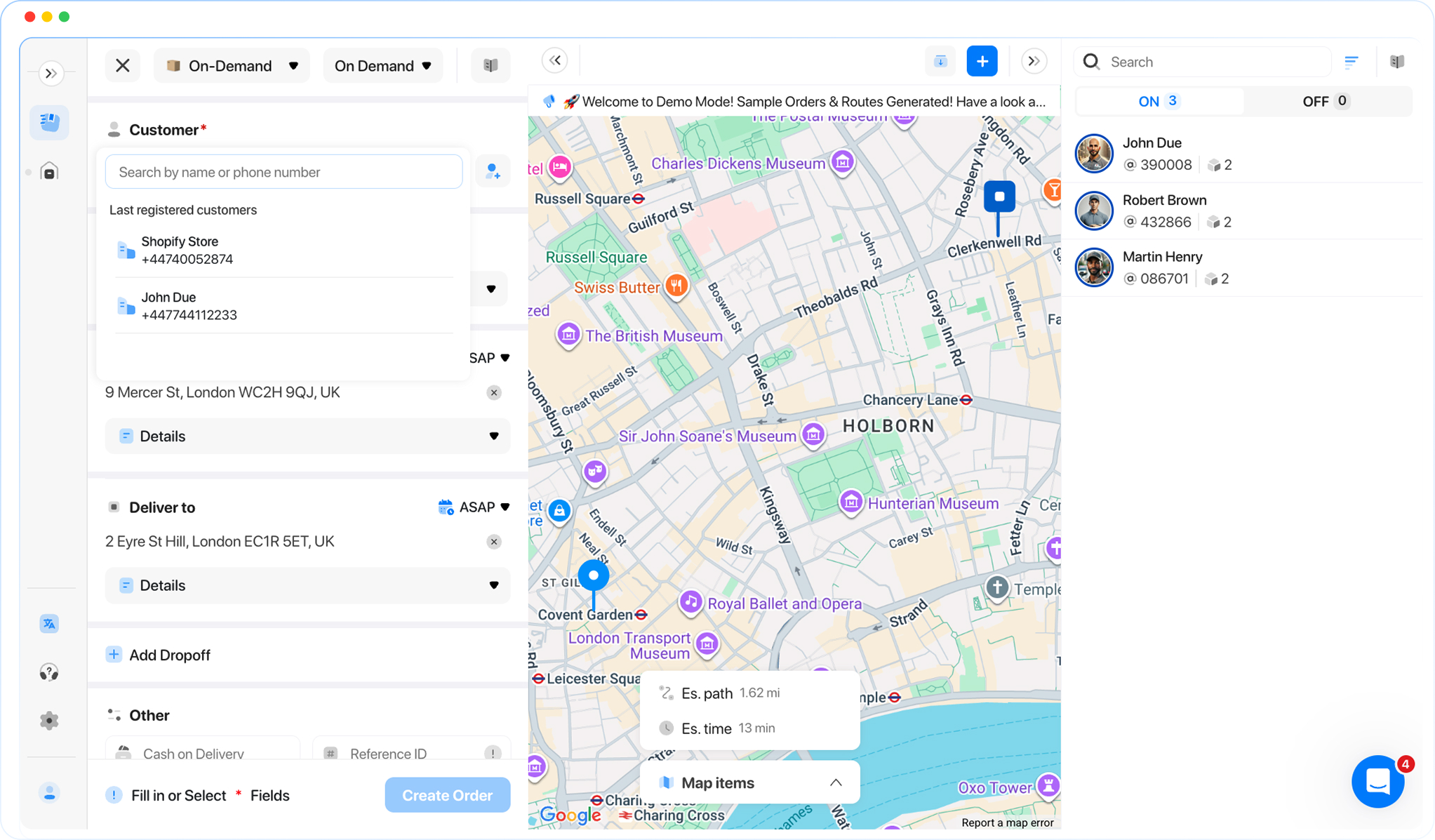
This is a logical concern. That’s why, at Onro, we added the ability to the Dispatcher to create an order on behalf of the customer, while maintaining that customer’s history and account. For this, your operator, after receiving the order details from the customer, can create a new order using the customer’s profile.
Which Courier Company Models Can Use Onro?
Any courier company where the business model depends on clients booking and managing their own delivery orders. Some examples:
- E-commerce delivery services.
- Next-day and Same-day delivery providers.
- On-Demand delivery services (especially restaurants/food delivery during peak hours).
- Couriers for Pharmacies and Laboratory Centers (Medical delivery).
- Food Delivery companies are working with restaurants.
- Delivery services for Home Businesses that sell via social media.