Ask almost any delivery brand and they’ll tell you customer retention matters. Then look at where the budget goes: ads, promos, getting new orders. Meanwhile the customers they already won are leaving quietly, often after one late parcel. And getting those people back costs far more than keeping them would have.
This guide starts with why keeping customers pays off so well for a delivery business. After that come 10 customer retention strategies, four mistakes that quietly undo them, and the numbers worth watching.
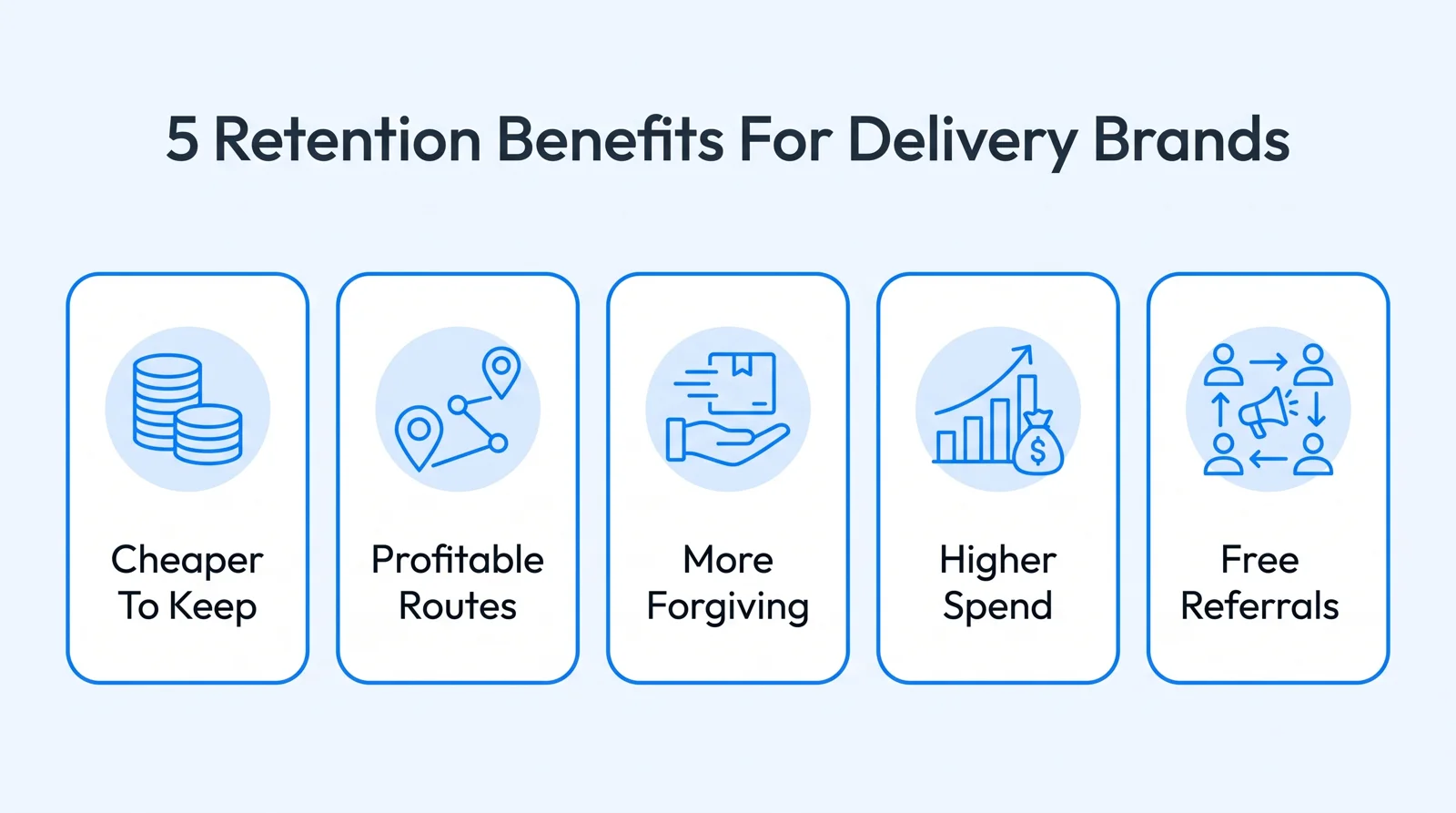
Why Is Customer Retention Important For Delivery Brands: 5 Key Benefits
Customer retention is your ability to keep customers ordering from you over time. For a delivery business it shows up directly in costs and margins, in ways a new customer never will.
1. It Is Far Cheaper Than Chasing New Customers
Winning a new customer means paying for ads and then earning their trust from zero. Keeping one you already have costs a fraction of that. A new customer costs about 5 times more than keeping a current one, which makes every repeat order money you didn’t have to spend twice.
2. Repeat Orders Make Your Routes Actually Profitable
This one is specific to delivery and easy to miss. Regulars tend to live in the same areas, so when they keep ordering, your stops get denser and the cost per delivery drops. One-off customers scattered across the map are expensive to serve. A steady base of regulars is what turns tighter, cheaper routes into a normal day instead of a good one.
3. Loyal Customers Give You Room To Make Mistakes
No delivery operation gets it right every time. Parcels arrive late now and then. A loyal customer usually shrugs it off, while a first-timer often leaves the moment something breaks. That goodwill buys you time to fix the problem. Handle it well and the customer often ends up more loyal than before.
4. Regulars Spend More And Order More Often
Returning customers are also worth more per order. They already trust you, so they order bigger baskets and come back more often. A first-timer usually starts small and careful, but a regular treats you as the default. One loyal regular can easily outweigh several one-time buyers put together.
5. Happy Regulars Bring You New Customers For Free
When a customer really likes how you deliver, they tell people, and their friends and neighbors start ordering too. Word of mouth is the cheapest and most trusted marketing there is, and the only way to get it is customer satisfaction. So a good customer retention program ends up bringing in new customers as a side effect.
10 Effective Customer Retention Strategies to Build Loyalty for Delivery Brands
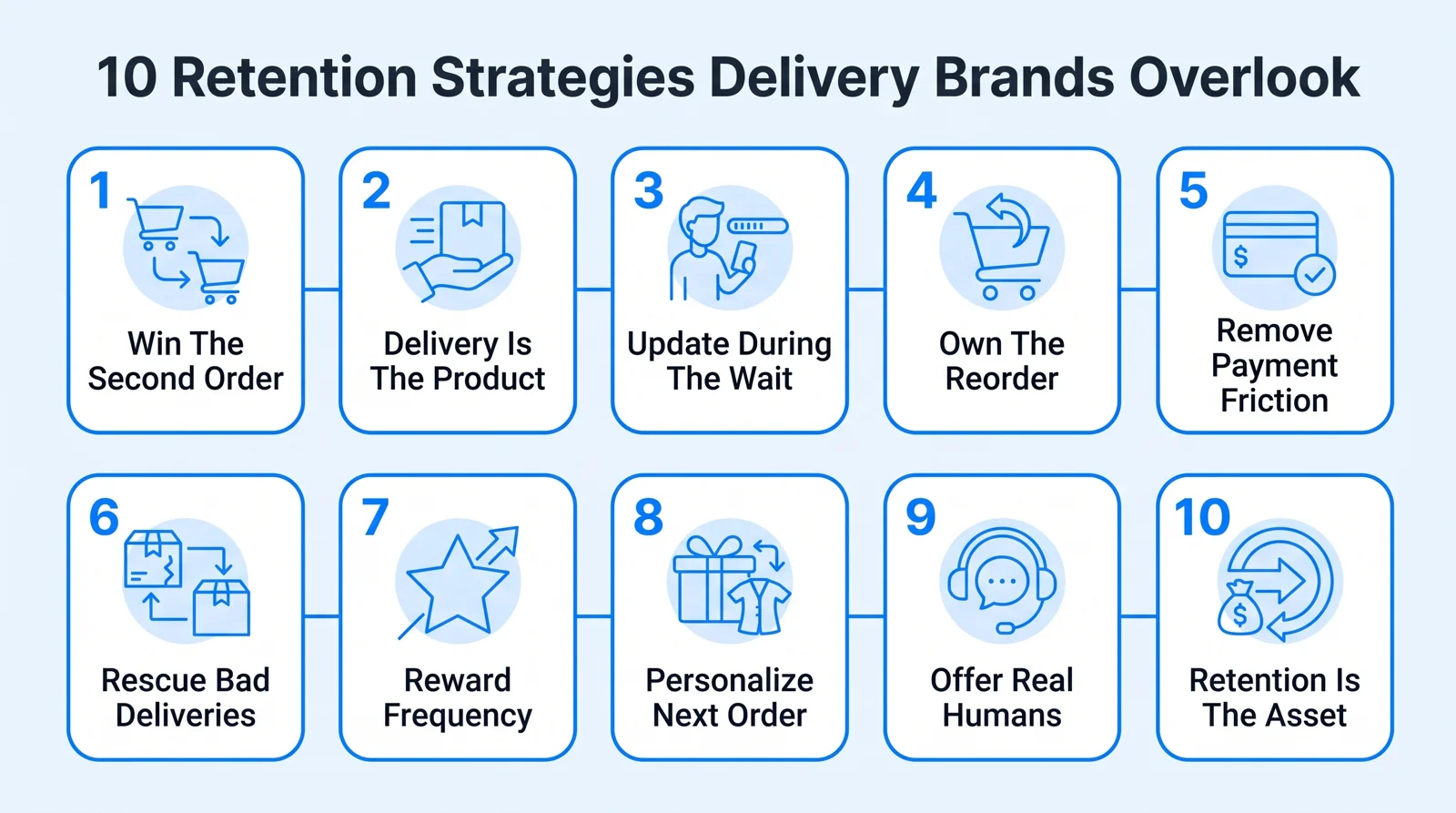
Each strategy below is about a moment that delivery brands tend to waste. Go through them in order, or skip straight to the one that’s costing you the most customers right now.
1. Win The Second Order Or Lose The Customer
A lot of brands put all their effort into the first order and then go silent, which is backwards. For a first-time customer, that first order is basically a test. The second order is where they decide whether you’re worth coming back to. Get the follow-up right and a stranger turns into a regular. Get it wrong and the ad money is gone.
- Send a genuine thank-you right after the first delivery, not a sales pitch.
- Follow up within a few days to check the first order arrived fine.
- Give them a small, timely reason to place that second order.
- Track how many first-time buyers come back for a second order each month.
2. Make The Delivery Experience The Real Product
From the customer’s side, the delivery is the product. They never see your warehouse or your dispatch team. They see whether the order turned up on time and in one piece, and whether anyone told them what was happening. A great product with a sloppy delivery still feels like a bad purchase.
It’s often the thing that decides who stays. Around 84% of shoppers won’t buy from a brand again after a bad last-mile delivery, so how the handoff actually goes matters as much as what’s in the box.
- Set delivery windows you can actually meet, then beat them by a little whenever you can.
- Train drivers on a polite, careful handoff, not just dropping the box.
- Package everything so it arrives intact, even after a rough trip.
- Confirm each completed delivery with a proof of delivery photo and a short arrival note.
With high-value items this gets even more important, because the buyer is nervous before they’ve even paid. Picture someone spending several hundred dollars at an online jewelry store, worried the order will arrive damaged or look nothing like the photos. For that person the delivery is where trust is won or lost.
That store ships every order in a custom jewelry box, so the unboxing feels like the luxury purchase it was. It also delivers within 24 hours across the US and offers paid shipping protection in case a package goes missing in transit.
Electronics work the same way. If the order arrives in good shape and the customer knows there’s a clear process if something goes wrong, most of the doubt around the purchase disappears.
A smooth delivery won’t fix a poor product, but a poor delivery can easily ruin a good one.
3. Turn The Waiting Window Into Trust
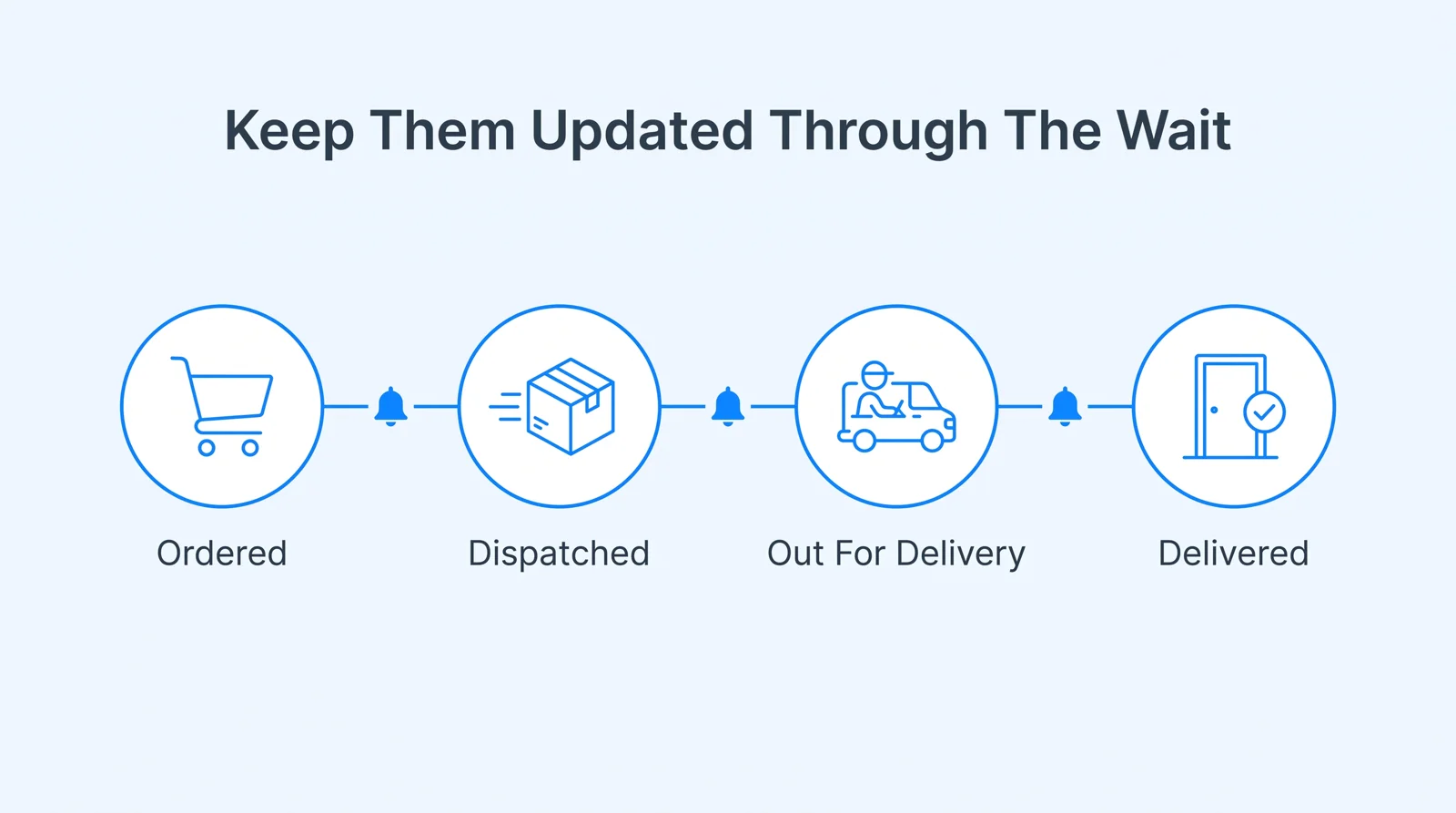
The time between paying and receiving is stressful. The customer has handed over the money and now they’re just waiting. Plenty of brands leave them with a bare tracking link, or with nothing at all. That silence turns into doubt pretty quickly, and doubt is an easy way to lose the next order.
- Send proactive updates at dispatch and again when the order is out for delivery.
- Keep the recipient updated on their own channel, whether that’s SMS or WhatsApp.
- Give a realistic live ETA, and let them know the moment it changes.
- Let customers reschedule or redirect a delivery without having to call support.
4. Own The Reorder For Anything That Runs Out
Plenty of delivery brands sell things that get used up, then treat every reorder like a brand-new sale. When a product runs out on a predictable schedule, the customer already wants more. The only question is whether they buy it from you or from whoever makes it easier. Owning that reorder is about the cheapest retention you’ll find.
- Predict when each customer will run low, then remind them a little early.
- Offer a one-tap reorder button with their previous order saved and ready.
- Add a subscribe-and-save option for anything people buy on a regular cycle.
- Time the delivery so it arrives just before they run out.
5. Clear The Payment Hurdles That Stall Repeat Business
You can get everything else right and still lose the reorder at the very last step: payment. A returning customer already wants to buy. One declined card or one extra form field, and the moment’s gone.
Paying should be the easiest part of coming back, yet it’s where a lot of repeat orders die. Customers can love your product and still give up at checkout if paying is a hassle. It hits hardest when your buyers don’t fit the usual payment setup, like people who keep their money in crypto.
If their preferred way to pay isn’t there, the reorder simply doesn’t happen. One fix is letting customers pay by sending crypto to a bank account as regular money. Some services convert the crypto into local currency and deposit it in a bank account, often within seconds.
For you it lands as regular cash and your accounting doesn’t change. For the customer, they finally get to pay with the money they actually hold.
Don’t add every payment method you can find, though. A crowded checkout puts people off too. Add the ones a good share of your customers keep asking for, then watch whether repeat orders go up.
- Securely save payment details so returning customers never have to re-enter them.
- Offer the payment methods your customers actually ask for.
- Remove any checkout field that isn’t needed to ship the order.
- Show a clear reason and an instant fix whenever a payment fails.
6. Rescue A Bad Delivery Before They Walk
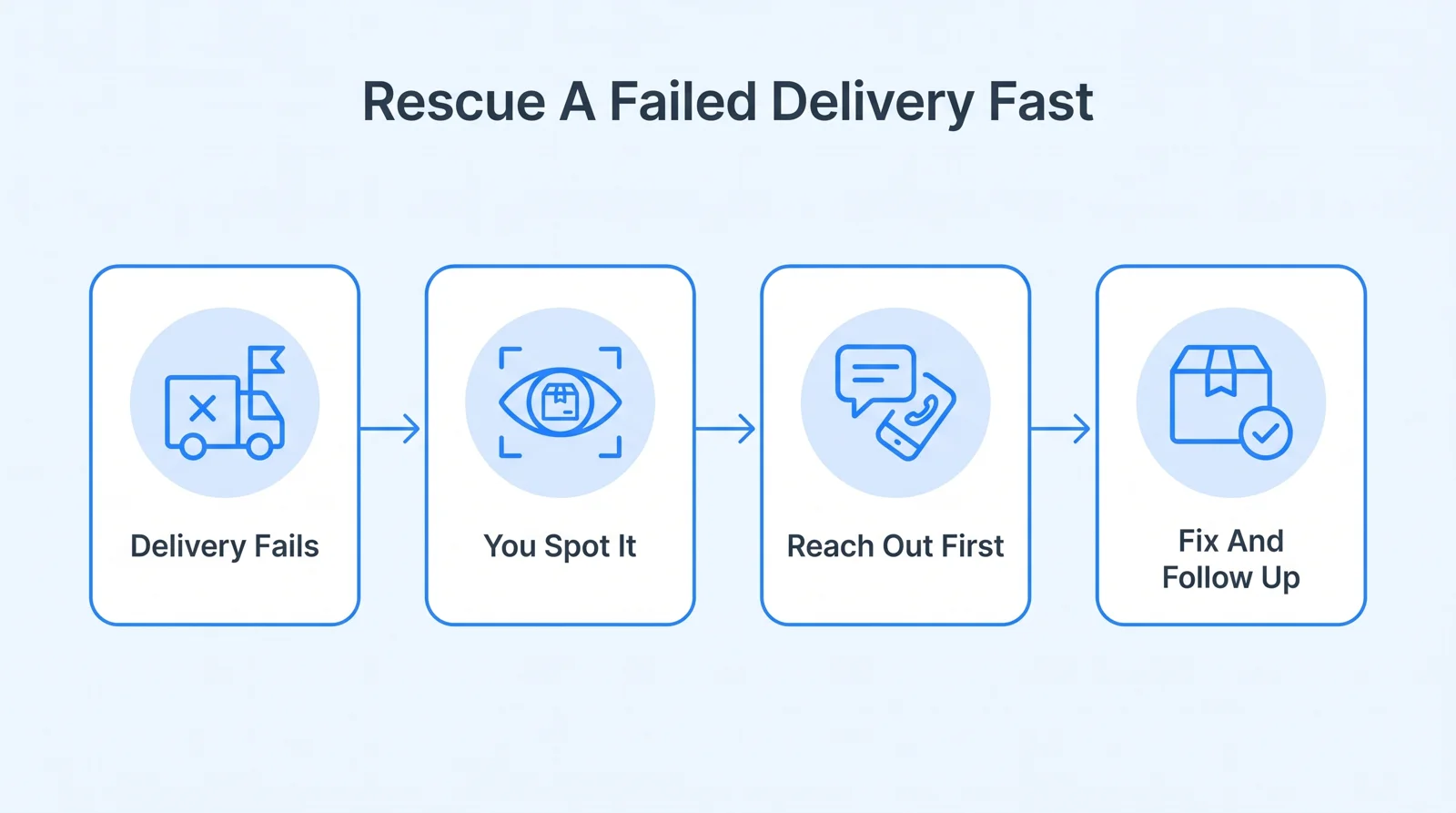
Deliveries go wrong sometimes. A parcel shows up late, or damaged. What decides whether you keep that customer is mostly what happens in the hour after. Handle it fast and honestly and many customers end up more loyal than before. Go quiet or get defensive and you’ve handed them a reason to leave.
In a 2022 Descartes study, almost a quarter of shoppers said they didn’t order from a retailer again after a poor delivery. Preventing failures in the first place helps too, and that’s where better routing cuts late and missed drops. If you want the longer version, we have a full guide on how to manage failed deliveries.
- Flag failed or late deliveries automatically, before the customer has to complain.
- Reach out first with a sincere apology and a concrete fix.
- Let support fully resolve a delivery problem on the spot, without escalation.
- Follow up a day after the fix to make sure they’re happy.
7. Reward How Often They Order, Not Just That They Joined
A lot of customer loyalty programs stop at a signup bonus and reward nothing after that. For a delivery brand, the thing worth rewarding is ordering again. A program that pays people for joining does nothing for retention, while one that gets better with every order keeps customer engagement up and gives people a reason to keep picking you.
- Tie every reward to order frequency or spend, not just signup.
- Build perks that clearly improve with each delivery.
- Surprise your most frequent customers with an unexpected extra now and then.
- Keep the next reward within reach, so customers don’t lose momentum.
8. Personalize The Next Order From The Last One
Every delivery leaves you data that most brands ignore, and that data is the base of good customer relationship management. You know what each customer bought and how often they buy it. That’s enough to make the next message feel like it was written for them.
Sending the same message to everyone treats a loyal regular like a stranger, and people tend to stay where they feel known.
- Suggest the next order based on what the customer bought before.
- Schedule offers around each customer’s real ordering rhythm, not a generic calendar.
- Reference past orders and preferences the way a regular would expect.
- Don’t push products a customer already buys from you every month.
Personalization matters more in some niches than others. It counts most when people buy for a personal goal, like with supplements or skincare, where the right product depends on what someone is trying to fix. A generic suggestion feels off there.
Take this Lion’s Mane supplement brand, for example. It sells Lion’s Mane in two versions: an 8:1 extract for focus and a 1:1 extract for immune support. If a customer bought the 8:1 extract because they wanted better focus, the next order should build on that choice.
Delivery details matter here too. If that customer orders one bottle every six weeks to the same address, the next message can show up around week five with a simple reorder option.
If they regularly use scheduled delivery, let them repeat the same delivery pattern. If they’ve ordered several times, show their previous product and delivery details so they don’t have to enter everything again.
That’s customer data turned into a better delivery experience. You’re taking away the small bits of effort that push a repeat customer to look somewhere else.
9. Give Them A Real Human When It Actually Matters
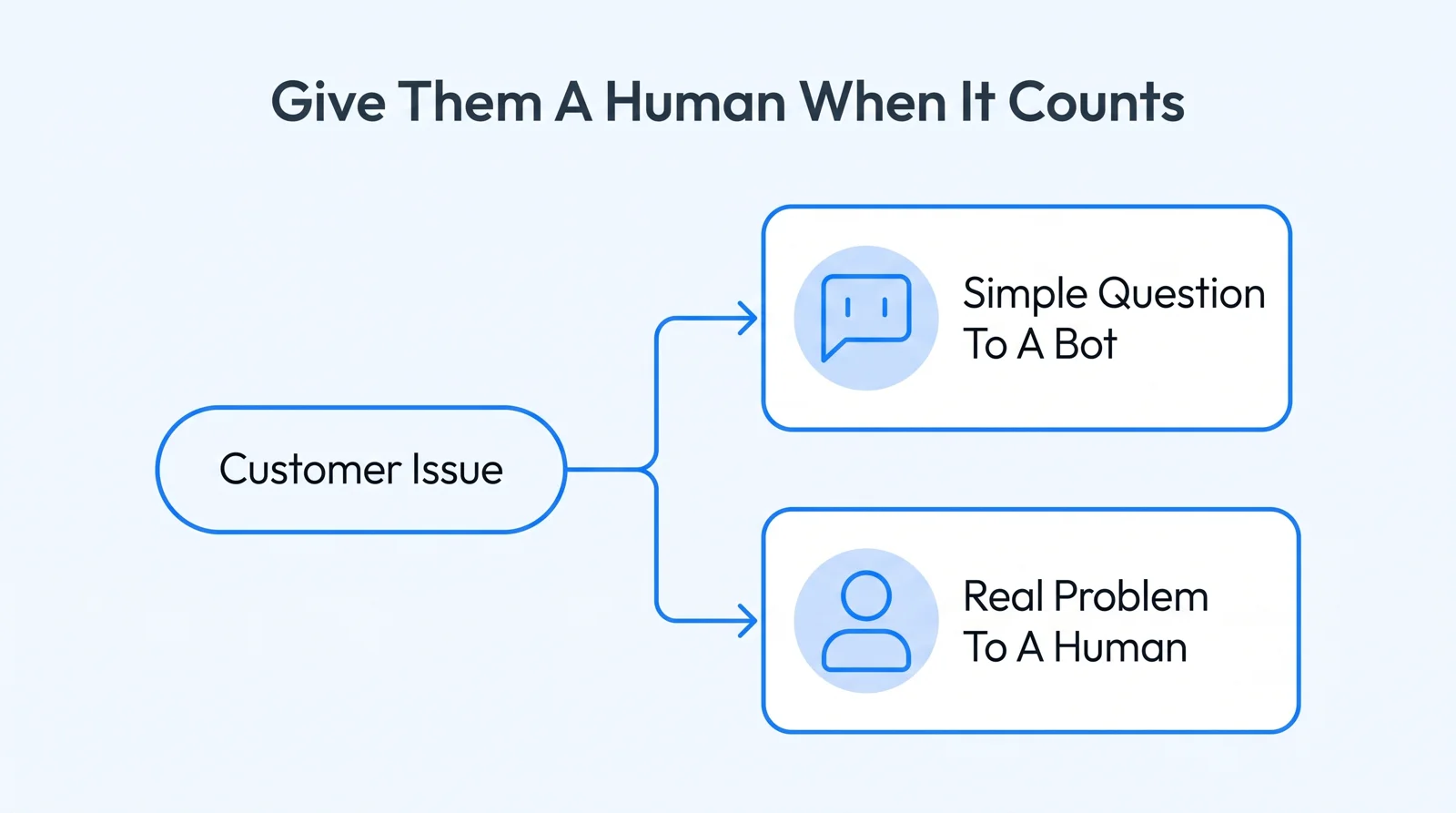
Automation works well right up until a delivery goes wrong. Then the customer wants a person, and a bot sending them through menus makes it worse.
Poor customer service during a real problem damages brand loyalty faster than almost anything else. Making it easy to reach a human when it counts is worth more than a dozen clever features.
- Put a real human contact option one tap away from the order screen.
- Use bots for simple questions, and send anything that’s gone wrong to a person.
- Give your customer success team the authority to fix delivery problems on the spot.
- Reply fast, because a slow answer during a delivery problem makes everything worse.
10. Treat Your Repeat Base As The Business’s Real Worth
This last one is more of a mindset than a tactic. Retention usually sits below growth numbers on the priority list, even though your base of loyal repeat customers is the most valuable thing you’re building. The longer they stay, the more each of them is worth.
Once you start measuring your customer retention efforts, priorities shift. Spending to keep a good customer stops feeling like a cost. Fixing a delivery that went wrong becomes urgent instead of annoying. Retention turns into a number you run the business by.
- Track repeat-customer revenue every month, as closely as you track new sales.
- Set a real target for retaining existing customers, and review it monthly.
- Work out what one loyal customer is worth to you over several years.
- Spend to keep your best customers as willingly as you spend to win new ones.
4 Customer Retention Mistakes Delivery Brands Keep Making + How To Fix Them
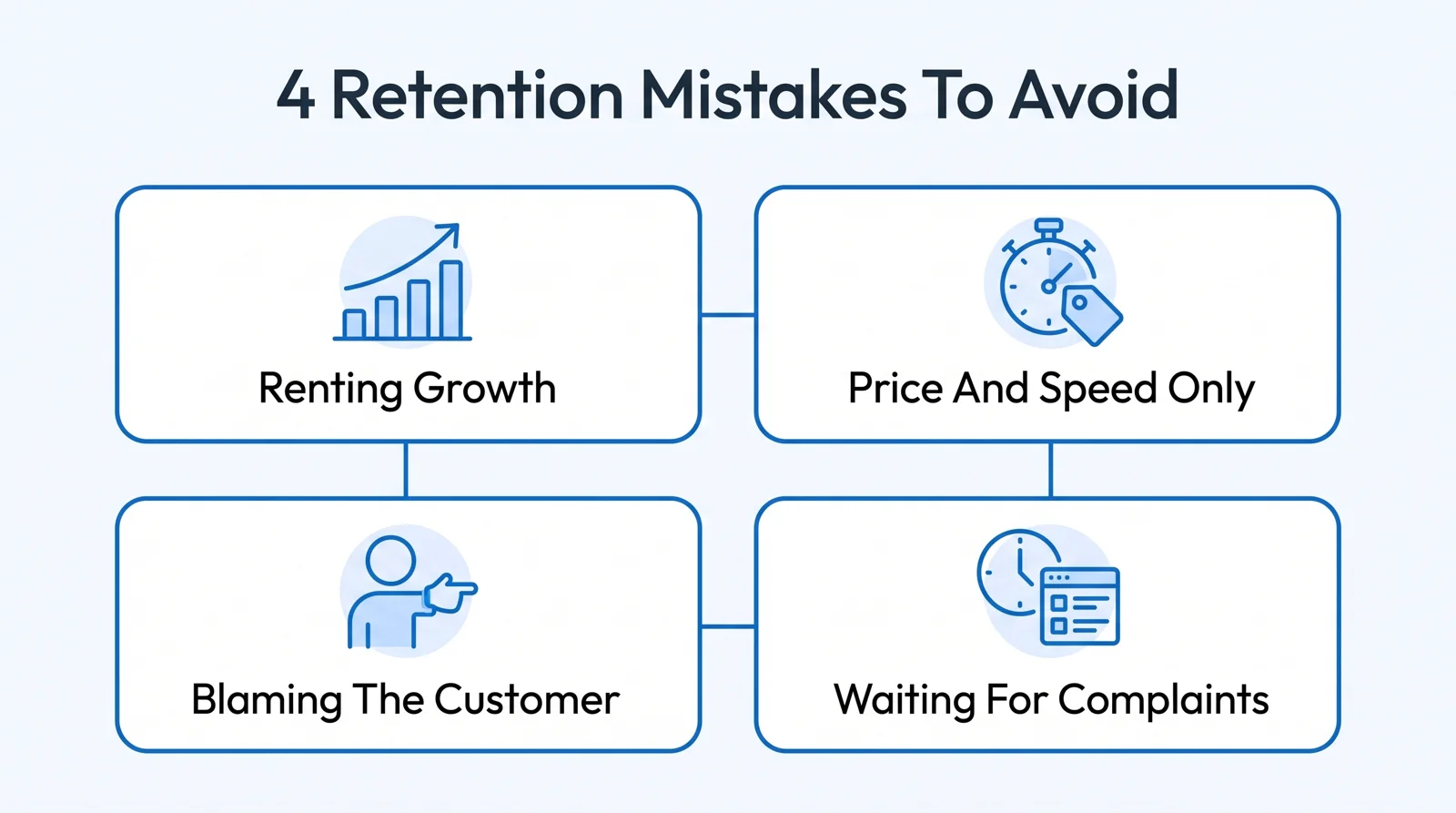
Even brands doing the right things keep making the same customer retention mistakes. These four are about mindset more than tactics, and they push customers away slowly, however good the product is.
1. Buying Growth Faster Than You Can Keep It
Watching new orders flood in after a big ad push feels great. If those customers leave just as fast, though, you’re renting growth. Spending heavily on customer acquisition while retention leaks is how brands stay busy and still lose money.
How to fix it: Track retention and acquisition side by side, never one without the other. Before you scale ad spend, make sure new customers actually stay.
2. Competing On Price And Speed Alone
Being the cheapest and fastest looks like the obvious move. The problem is that anyone can undercut you tomorrow, and a customer who came for the lowest price will leave for the next one. Make price and speed your only hooks and you’ve trained people to shop around.
How to fix it: Compete on things competitors can’t copy overnight, like service and reliability. Give customers a reason to stay that has nothing to do with being the cheapest.
3. Blaming Churn On The Customer, Not The Experience
When someone stops ordering it’s tempting to call them disloyal and move on. Usually, though, they left over something you could have fixed, like a late delivery or an annoying reorder process. Blaming them means you learn nothing and the same problem keeps costing you customers.
How to fix it: Ask lapsed customers directly why they left, and actually read the answers. Treat every lost customer as a report on what needs fixing in your experience.
4. Waiting For A Complaint Instead Of Asking First
A quiet customer isn’t necessarily a happy one. Most unhappy customers never complain; they stop ordering and move on. If your only feedback is the occasional angry email, you’re missing most of the churn.
How to fix it: Ask for customer feedback proactively, right after a delivery while it’s still fresh. Watch for early warning signs, like a customer ordering less often, before they leave completely.
How To Tell If Your Customer Retention Rate Is Actually Improving
Strategies only count if the numbers move. These metrics show whether your work is actually improving customer retention.
| Metric | What It Tells You | How To Work It Out | Healthy Sign |
|---|---|---|---|
| Repeat Purchase Rate | Share of customers who order more than once | Repeat customers ÷ total customers | 25% to 30% and climbing |
| Customer Retention Rate | Share of customers you keep over a period | (End customers − customers acquired) ÷ start customers | Higher each quarter |
| Customer Churn Rate | Share of customers who stop ordering | Customers lost ÷ starting customers | Trending steadily down |
| Order Frequency | How often a customer orders from you | Total orders ÷ unique customers | Rising over time |
| Average Time Between Orders | The gap between a customer’s orders | Average days between repeat orders | Getting shorter |
| Customer Lifetime Value | Total revenue from a customer over time | Order value × frequency × lifespan | At least 3× your acquisition cost |
| Repeat Revenue Share | Share of revenue from returning customers | Repeat revenue ÷ total revenue | Growing toward the majority |
Conclusion
If you only change one thing, stop treating each delivery as a one-off transaction and start treating it as the reason someone comes back. Customer retention for delivery brands comes from on-time drops and problems fixed before the customer has to ask, much more than from a loyalty app. Pick two of these strategies and start there.
That’s the part we care about at Onro. We give delivery and courier businesses one system for the whole operation: dispatch, routing, live tracking, proof of delivery. When deliveries run smoothly, keeping customers gets a lot easier.

Try Onro for Free
Get your free access to the Onro All-in-one Delivery Management Software.